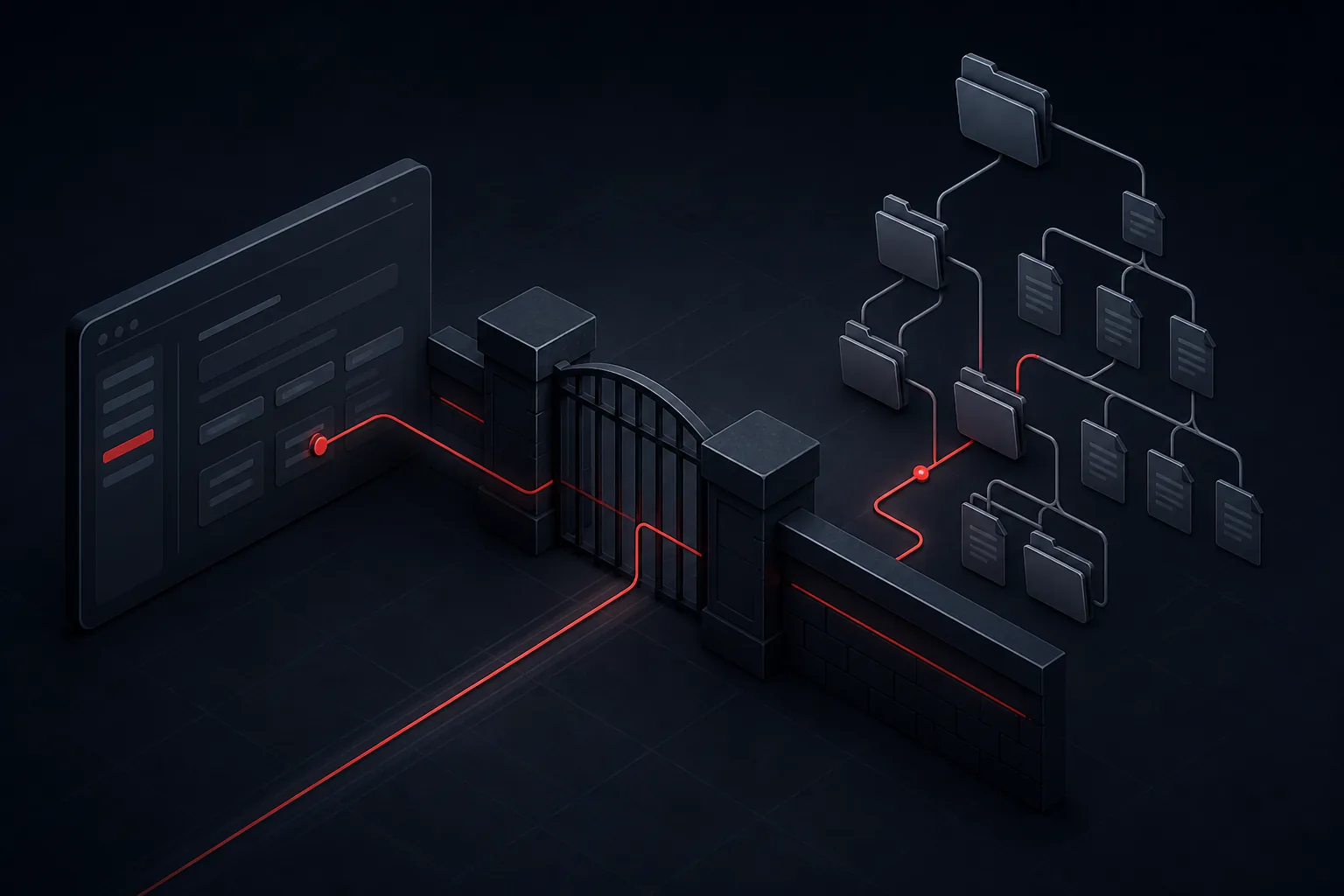

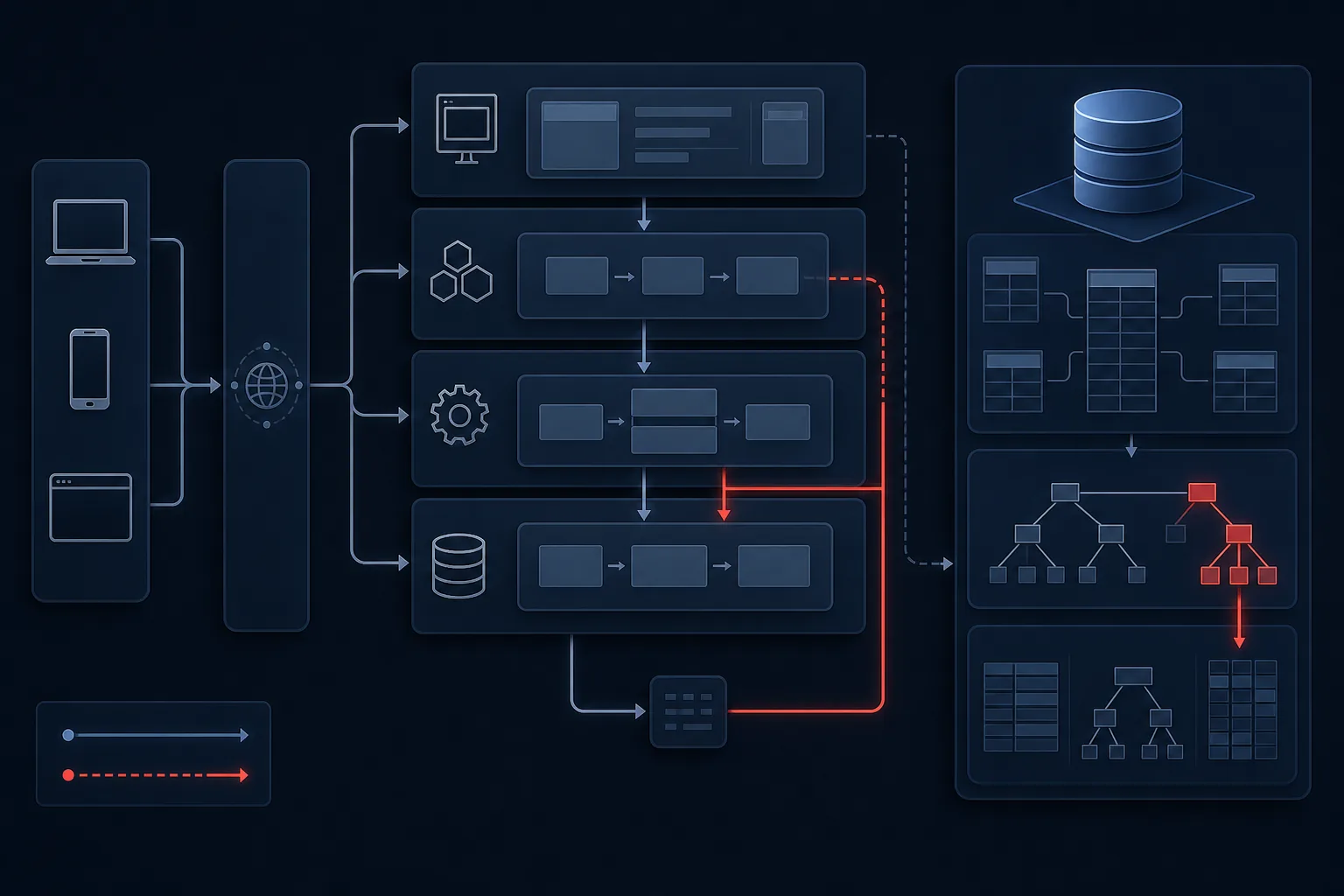
SQL injection remains one of the most persistent web application risks. It appears wherever an application takes untrusted input — a username, an identifier, a search term — and places that value into a database query without treating it as data. When that happens, the database can interpret attacker-controlled text as part of the query itself.
This article explains how SQL injection occurs, the forms it typically takes, why it matters to organisations, and how security testing and secure development reduce the risk. It is written for security and engineering teams, not as an exploitation guide.
What SQL injection is
SQL is the language applications use to read, insert, update, and delete records in relational databases such as MySQL, MariaDB, Microsoft SQL Server, and Oracle. A well-formed application keeps user input and query structure separate. SQL injection occurs when that separation fails.
In practical terms, the application becomes a conduit. Input collected from parameters, forms, cookies, or headers reaches a query. If that input is concatenated into the statement, a crafted value can change the query's meaning — returning extra rows, bypassing authentication logic, or altering data the user should never be able to touch.
Why it occurs
The root cause is almost always the same: unsanitised user input is mixed into a query. Common contributing factors include legacy string-built SQL, dynamic filters assembled in code, and an assumption that client-side checks are enough.
- Authentication and login forms that build queries from username or password fields
- Record lookup pages that pass identifiers directly into SELECT statements
- Search, filter, and reporting features that append user-controlled clauses
- Upload or write functions that include user values in INSERT or UPDATE statements
Common SQL injection types
Not every injection looks the same. The visible behaviour of the application often determines how the issue presents itself during testing.
Error-based SQL injection
The application returns database error messages, stack traces, or query fragments. Those responses can confirm that input reached the database engine and that errors are not handled safely.
Blind SQL injection
The application does not display database errors, but its behaviour still changes. Boolean-based blind injection uses true or false conditions to infer results from page content or status. Time-based blind injection infers the same through delayed responses. Both still indicate that user input is influencing query execution.
How it can affect applications and organisations
The impact is not limited to a single table. Depending on database privileges and application design, SQL injection can allow unauthorised data retrieval, modification, or deletion. In more serious cases, a compromised database account may be able to read files the service can access, write files where permissions allow, or escalate toward execution on the host.
- Disclosure of customer, financial, or authentication records
- Integrity failures such as unauthorised inserts, updates, or deletions
- Bypass of application access control through manipulated authentication queries
- Broader compromise where the database service has excessive operating-system privileges
For organisations, that translates into confidentiality incidents, regulatory exposure, and loss of trust. The database is often the system of record. If queries cannot be trusted, neither can the data they return.
How penetration testers identify SQL injection
Professional testing combines method with restraint. Testers map where the application accepts input and where that input is likely to reach a database. They look for authentication, record retrieval, and data-write functions, then observe whether unexpected input changes application behaviour.
Two approaches are commonly used. Source-code review can trace input from parameters into query construction and confirm whether statements are parameterised. Black-box testing observes live behaviour: error handling, response differences, and whether the application treats unexpected characters as data or as syntax. Trial and error is part of black-box work. It is not a substitute for confirming a real, exploitable condition.
Secure development practices
Prevention sits with engineering. The most reliable control is to stop building SQL by concatenating strings.
Parameterised queries
Prepared statements and bound parameters keep query structure in the application and values in a separate channel the database will not interpret as SQL. Object-relational mapping layers can help when they are used correctly, but they do not remove the need to avoid raw dynamic SQL.
Input validation
Validate input by type, length, and expected format before it is used. Allowlists are stronger than attempting to strip dangerous characters. Identifiers that should be numeric should be treated as numbers. Values that must match a known set should be checked against that set.
Least privilege and error handling
The database account used by the application should have only the permissions the application needs. Verbose database errors should never reach end users. Logging can retain enough detail for operations without exposing query structure in the browser.
Appropriate remediation
- Replace string-built queries with parameterised statements or a safe query API
- Validate and allowlist incoming values at the application boundary
- Reduce database privileges and remove unused routines that can read or write files
- Handle errors centrally so database diagnostics are not returned to clients
- Retest the original input path after the change, including related parameters
Why security testing is important
SQL injection is well understood, yet it continues to appear in production systems — especially where older code, rushed features, or generated queries sit outside a team's usual review path. Security testing finds those gaps before they become incidents.
A thorough assessment does more than name the vulnerability. It shows where untrusted data enters, how it reaches the database, and what an organisation should change in code, configuration, and privilege. That is the standard Zerox Innovation applies in offensive security work: evidence, impact, and a path to fix.