
Industrial control systems sit where digital commands meet physical processes: power, water, manufacturing, fuel, and building management. A weakness that would be an inconvenience on an office laptop can become a safety, availability, or environmental event on a plant network.
This article outlines how professional ICS/OT security testing should be approached. It draws on practical assessment experience with PLC and SCADA environments, without treating a lab exercise as a public attack playbook.
What ICS/OT security means
Information technology (IT) security is largely about confidentiality, integrity, and the protection of data. Operational technology (OT) adds safety and continuity of process. Programmable logic controllers (PLCs), remote terminal units, human-machine interfaces, and historians speak industrial protocols — Modbus, Siemens S7, DNP3, BACnet, IEC 60870, and others — that were often designed for trusted networks, not for the open internet.
ICS security is therefore not a copy of web-application testing. It requires an understanding of process, protocol, and the fact that some tests are unsafe to run on live plant.
Why ICS environments require specialised testing
- Legacy devices may have no authentication, or only default vendor credentials
- Engineering workstations, HMIs, and PLCs often share flattened networks
- Protocol services can expose firmware, module identity, and process values to anyone who can reach the port
- Availability constraints mean testers cannot treat a PLC like a disposable lab virtual machine
Specialised testing starts with scope, safety rules, and a clear distinction between passive observation, controlled laboratory validation, and anything that could change process state.
Asset discovery
You cannot protect what you cannot name. Discovery identifies controllers, HMIs, engineering stations, and supporting servers. On a plant network this may use approved inventory sources, passive monitoring, and carefully bounded active checks. The output should be an asset list with addresses, roles, and apparent services — not a noisy scan of every possible port on a live controller.
Exposure assessment
A recurring lesson from ICS assessments is how often engineering interfaces, vendor web servers, and protocol ports are reachable from places they should not be — including the public internet. Search engines that index internet-connected devices regularly show industrial protocols and vendor banners in unexpected places.
Exposure assessment asks a simple question: who can reach this controller, this HMI, this historian? Public ranges, partner links, and poorly segmented corporate networks all enlarge the attack surface. Screenshots of panels and remote desktops, where they exist, are a warning that a process interface is visible outside the control room.
Network and protocol assessment
Industrial protocols often announce identity, firmware, and sometimes process data to a client that speaks the protocol. Assessment looks at which ports are open, whether banners or protocol metadata identify vendor and version, and whether those versions have published advisories.
Modbus, S7 communication, and related fieldbus services were not designed as internet APIs. Finding them on an untrusted network is itself a finding. Deeper protocol checks belong in a laboratory or a tightly controlled window, with the plant owner aware of what will be queried.
PLC and SCADA security considerations
Controllers execute logic that drives physical outputs. SCADA and HMI software present that state to operators. Weaknesses in either layer can mislead operators or, in the worst case, influence control. Testing should consider authentication on engineering access, whether logic can be read or altered without authorisation, and whether historian and HMI paths are separated from the plant floor.
Configuration, authentication, and access control
Many ICS findings are configuration, not exotic exploits: unused services, shared accounts, missing role separation between operator and engineer, and remote access tools left in place after a vendor visit. Access control should follow the process: who may view, who may command, and from which network zones.
Segmentation
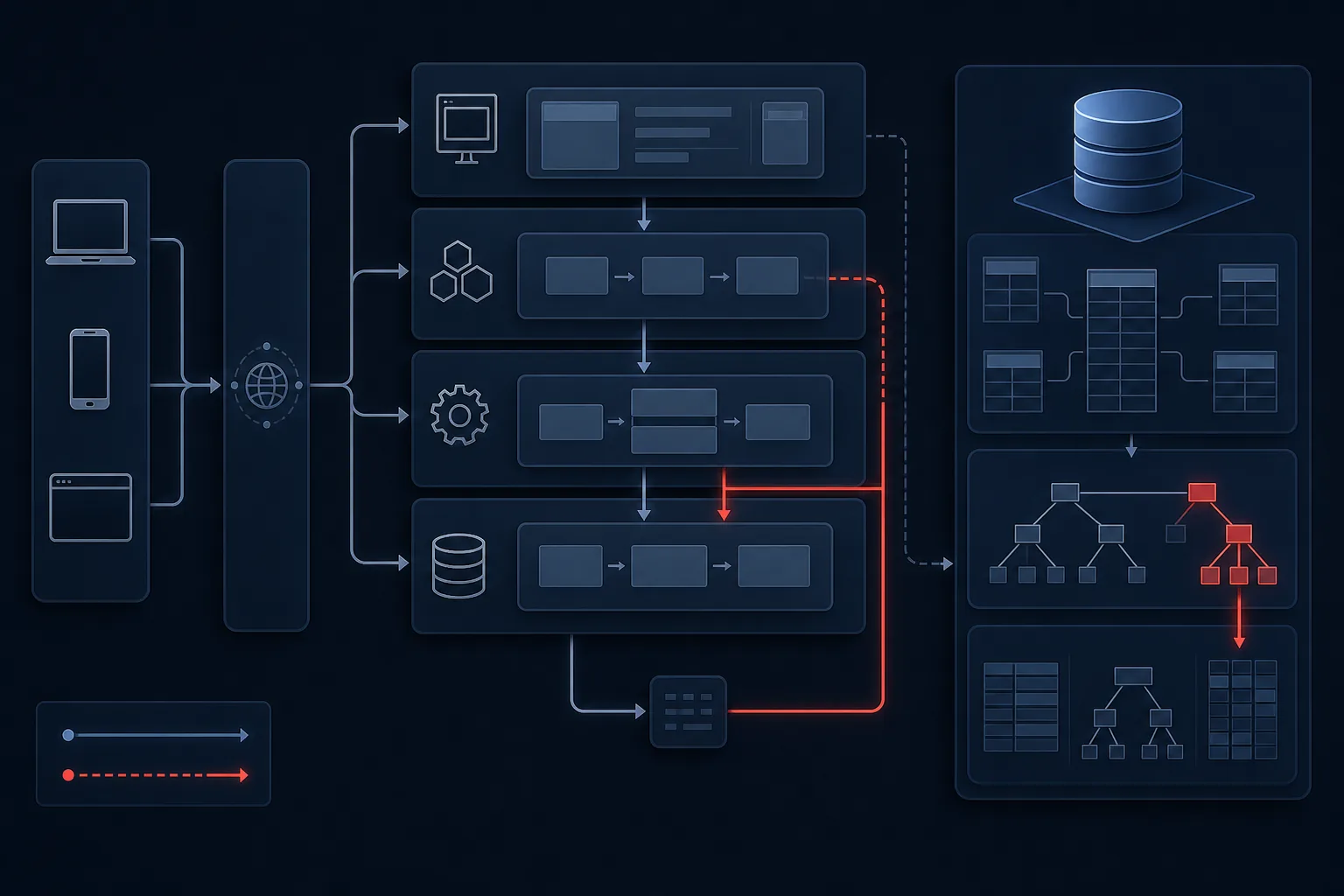
Purdue-style zoning remains a practical model: enterprise IT, demilitarised operations, supervisory, and control. The lesson from assessments is that a single reachable protocol port can collapse those zones. Firewalls, unidirectional gateways where appropriate, and jump hosts with logging are how organisations keep an IT compromise from becoming an OT event.
Controlled testing considerations
ICS testing must be planned. Some protocol functions can change setpoints, inhibit alarms, or affect I/O. Those actions belong in a simulator, a digital twin, or a maintenance window with operations present. Production testing should prefer read-only enumeration, configuration review, and architecture analysis unless the owner has explicitly authorised a control-impact test.
Laboratories — simulated PLCs, Modbus slaves, S7 practice environments — are the right place to understand tool behaviour before anyone touches a live process.
Reporting
An ICS report should speak to plant managers as well as security teams. Findings need asset context, protocol, likely impact on process and safety, and a realistic remediation path. Screenshots of a lab are not a substitute for mapping each issue to an owner and a zone.
Remediation
- Remove internet exposure of engineering and protocol ports
- Replace default credentials and disable unused remote services
- Segment OT from IT and restrict engineering access to dedicated paths
- Patch or compensate firmware with known advisories, with vendor and operations involved
- Monitor industrial protocol use for unexpected clients
Lessons learned
Internet-wide indexing of industrial protocols continues to find devices that should never have been public. Default credentials and flat networks remain more common than sophisticated PLC exploits. Specialised testing is valuable because it combines that exposure picture with protocol literacy and operational restraint.
The goal is not to prove that a controller can be disturbed. The goal is to show where an unauthorised party could reach the process — and to close that path before it is used.